A villa built without a PBG (Persetujuan Bangunan Gedung) is not just missing a document. Without an approved PBG, Indonesia’s building regulations prevent the property from moving to the SLF (Sertifikat Laik Fungsi) stage. This blocks legal occupancy and operation.
Since the implementation of Government Regulation No. 28 of 2025 (PP 28/2025), the licensing procedure has become more structured and sequential. Every step, from zoning approval to building approval and functional certification, must be completed in order.
This guide explains how PBG and SLF work under the current framework, how the new deemed-approval mechanism works, and how the process differs between Bali and Lombok.
What Are PBG and SLF?

The PBG (Persetujuan Bangunan Gedung), or Building Approval, is the standard for legalizing building construction in Indonesia and has replaced the IMB since 2021. Before work starts, authorities review your architectural, structural, and MEP plans to ensure they meet Indonesia’s technical standards.
Once you have a PBG, it remains valid as long as your building follows the approved plans. Any changes to structure, design, or systems require new approval. This gives you long-term certainty if you build according to the rules.
After construction, you must obtain the SLF (Sertifikat Laik Fungsi), or Certificate of Function Worthiness. This certificate confirms your building matches the approved PBG and is ready for safe use and operation.
For residential properties, the SLF is valid for 20 years. For commercial, hospitality, and industrial buildings, it is valid for 5 years. You must renew the SLF before it expires to avoid disruptions.
PBG and SLF are two distinct approvals, and you need both in the correct order. First obtain the PBG to begin construction, then the SLF to confirm your building is ready for use.
PBG and SLF applications are submitted through SIMBG (Sistem Informasi Manajemen Bangunan Gedung), which reviews your architect’s drawings, structural calculations, and inspection results.
Having a PBG alone does not complete your licensing obligations. You cannot receive an SLF without an approved PBG because inspections are based on the original plans.
| Term | Definition |
|---|---|
|
SIMBG (Sistem Informasi Manajemen Bangunan Gedung) |
Indonesia’s digital building management system used to process building-related applications, including PBG and SLF, and to review technical building documentation and assessment results. |
|
MEP (Mechanical, Electrical, and Plumbing) |
The mechanical, electrical, and plumbing systems installed in a building, which form part of the technical plans assessed during the building approval process. |
PBG vs. SLF in Indonesia: Differences and Requirements
| Aspect | PBG (Persetujuan Bangunan Gedung) | SLF (Sertifikat Laik Fungsi) |
| Purpose | Approves the construction of a building based on the proposed plans and applicable technical standards | Confirms that the completed building matches the approved PBG and is fit for use |
| When It Is Required | Before construction begins | Construction is 70-100% complete |
| What Is Assessed | Architectural, structural, and MEP plans and technical requirements | The completed building and whether it corresponds to the approved PBG |
| Validity | Indefinite, as long as the building’s structure, design, and systems remain consistent with the approved plans | 20 years for residential buildings; 5 years for commercial, hospitality, and industrial buildings |
What Is the Required PBG and SLF Process?
Under PP 28/2025, the process starts by confirming the project complies with applicable zoning rules. You must obtain the required environmental approval before applying for the PBG. After the PBG is approved and construction is complete, the building can proceed to the SLF stage.
Before starting the application, gather the documents required for your project. For a PBG, these generally include land-rights documentation, zoning and environmental approvals, and technical building plans, including architectural, structural, and MEP drawings.
For an SLF, your documents must show that the completed building matches the approved PBG and has passed the required assessments. The specific paperwork depends on your property, building type, land rights, and project details. For a step-by-step checklist and application guide, see ILA’s guide on how to apply for PBG and SLF.
Each stage requires documentation from the preceding stage. You cannot rearrange the process by applying for a later permit first.
Zoning Compliance Through KKPR
KKPR (Kesesuaian Kegiatan Pemanfaatan Ruang) is the official confirmation that your planned use and construction align with the zoning regulations for your specific plot.
If a digital Detailed Spatial Plan (RDTR) is already in the OSS (Online Single Submission) system, you can get confirmation automatically through KKKPR.
If there is no integrated RDTR, you need to apply through the local spatial planning authority for formal approval with PKKPR. This process usually takes more time.
KKPR is free of charge, but it is a mandatory stage of the process. Without KKPR, you cannot proceed to PBG.
Environmental Clearance
The type of environmental approval you need depends on your project’s size and what it involves.
For example, if you are building one private villa, you usually need an SPPL. If you are developing several villas, a boutique hotel, or a restaurant with more than 2,000 m² of built-up area, you generally need a UKL-UPL.
Projects larger than 5 hectares or 10,000 m², or those close to sensitive ecological areas, need a full AMDAL.
You must complete the environmental clearance before you can apply for the PBG. After the PBG is approved and construction is complete, you can apply for the SLF.
| Term | Definition |
|---|---|
|
RDTR (Detailed Spatial Plan) |
A detailed spatial planning document that sets out the permitted land uses and development requirements for specific areas. |
|
KKKPR (Confirmation of Spatial Utilization Conformity) |
A digital confirmation that a proposed land use conforms to the applicable spatial plan, generally available when the relevant RDTR has been integrated into the OSS system. |
|
PKKPR (Approval of Spatial Utilization Conformity) |
A formal approval of spatial utilization issued when the relevant area does not have an integrated RDTR through the OSS system. |
|
SPPL (Environmental Management and Monitoring Statement) |
A statement of commitment to managing and monitoring environmental impacts for activities that are not subject to the more comprehensive environmental assessment requirements. |
|
UKL-UPL (Environmental Management and Monitoring Efforts) |
The management and monitoring of businesses and/or activities that do not have significant impacts on the environment, which are required as part of the decision-making process concerning the implementation of such businesses and/or activities. |
|
AMDAL (Environmental Impact Assessment) |
An assessment of the significant impacts of a planned business and/or activity on the environment, which is required as part of the decision-making process concerning the implementation of such business and/or activity. |
What Changed Under PP 28/2025?
In June 2025, PP 28/2025 replaced Government Regulation No. 5 of 2021 and restructured how OSS’s licensing subsystems fit together, including how building approvals connect to the wider platform.
If you own property in Bali or Lombok, there are three important changes that will impact how you handle building approvals and stay compliant.
Building Approvals Are Integrated Into OSS
PP 28/2025 expanded OSS from three licensing subsystems to six, adding the Basic Requirements subsystem (Subsistem Persyaratan Dasar). Previously, businesses had to coordinate separately with different authorities for environmental approval, KKPR, and building permits.
SIMBG output links directly to your OSS record. Your PBG and SLF status are combined into one unified licensing file.
You can manage all these approvals in one place. The OSS platform streamlines the process and lets you track your licensing progress more efficiently.
Implementation is ongoing at the regency level, so the exact process may vary by location.
Fiktif Positif Applies to PBG and SLF
PP 28/2025 applies the deemed-approval mechanism (fiktif positif) to PBG, SLF, and also to technical and environmental approvals. This change broadens the scope of automatic approvals for compliant applications.
If you submit a compliant application and the authority does not reply within the set timeframe, your approval is granted automatically. OSS must then give you proof of approval, which is just as valid as a regular approval.
This mechanism protects you from administrative delays, but you still need to make sure all your documents are accurate and complete.
Articles 244 and 245 of PP 28/2025 allow the government to conduct post-approval audits of licenses issued through this mechanism. If an audit finds the application incomplete or containing inaccurate information, the deemed-approved license can be revoked.
Fast-Track Rules Are Available for Strategic Zones
If your project is located in a Special Economic Zone (KEK), Free Trade Zone, or is classified as a National Strategic Project, you can access fast-track processing.
For these projects, you can complete certain documentary checks after the license is issued, allowing you to move forward more quickly.
Most villa and boutique hospitality projects in Bali do not qualify for fast-track rules. But if your project is in the Mandalika Special Economic Zone in Lombok, you may be able to use them.
How Has Zoning Enforcement Changed in Bali?
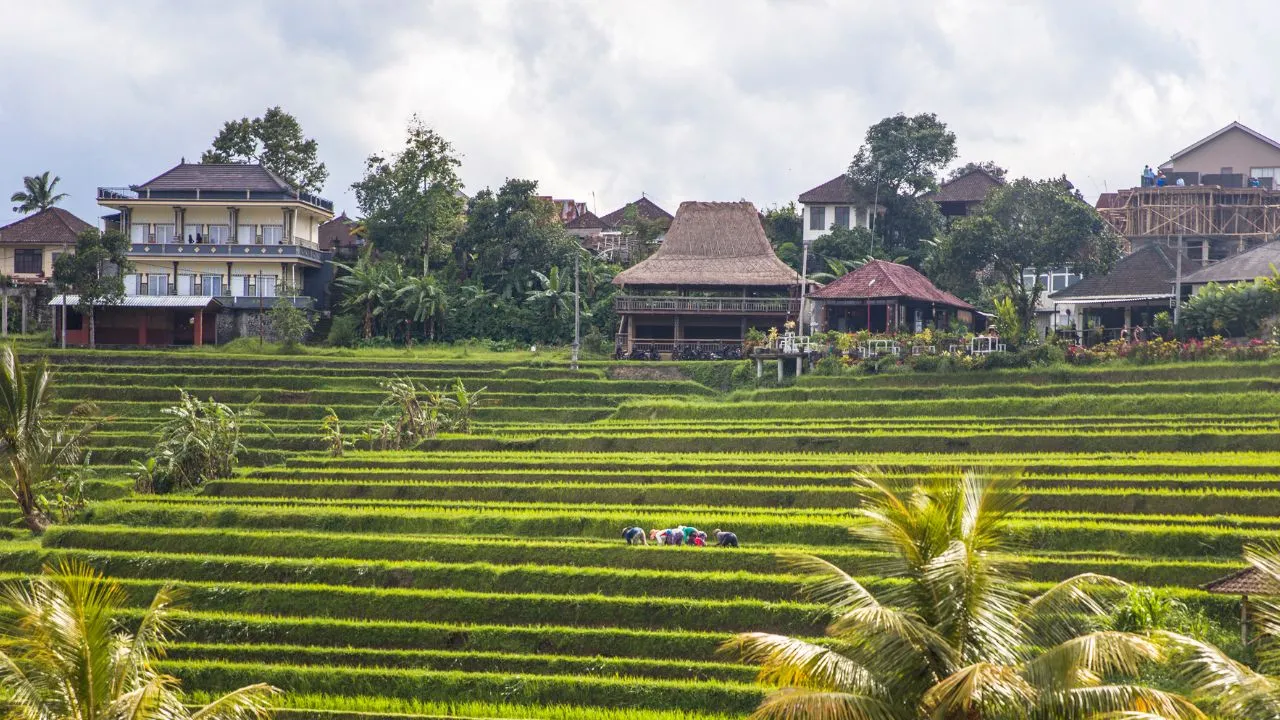
Bali’s spatial planning is governed by Perda Provinsi Bali No. 2 of 2023, which sets the provincial RTRW for 2023 to 2043. Each regency’s RDTR then defines exactly what land uses and developments are allowed in its jurisdiction.
Under the RTRW, KKPR is issued by confirmation, approval, or recommendation depending on your project and whether the land is within a digitized RDTR.
Before purchasing land, verify that the zoning permits your intended development. Applications for KKPR on land in a green zone (protected area) will be rejected and will halt your project. ILA Global Consulting can help confirm whether your planned use is allowed and if the zoning is accurate before you proceed.
Perda Provinsi Bali No. 4 of 2026 also addresses the conversion of protected productive farmland (LP2B) into villas or commercial buildings and prohibits nominee land arrangements, with administrative and criminal penalties for violations.
If your proposed property is on or near agricultural or LP2B-protected land, check zoning compliance first. Do this before investing in architectural plans or technical work to avoid costly delays.
If your property deal involves a local landowner, verify the land arrangement and title before moving forward. With the nominee restrictions in Perda 4/2026, holding land in someone else’s name now carries serious legal risks.
| Term | Definition |
|---|---|
|
RTRW (Regional Spatial Plan) |
A long-term spatial planning framework that establishes the broad allocation and permitted use of land across a province or other administrative region. |
|
LP2B (Sustainable Food Agricultural Land) |
Agricultural land designated for sustainable food production and protected from conversion to other uses under applicable Indonesian regulations. |
| Nominee Land Arrangement | An arrangement in which land is registered in the name of one person while another person, often a foreign investor, is intended to hold the economic interest in the property. |
How Does the PBG and SLF Process Differ Between Bali and Lombok?
The national licensing requirements for PBG and SLF apply in both Bali and Lombok. However, the process can differ depending on the land title available to the property owner and the local spatial planning framework.
In Bali, a foreign individual holding a standard leasehold (Hak Sewa) cannot apply for a PBG or SLF personally. The Indonesian landowner must submit the application in their name, supported by a legally binding lease agreement granting you the right to construct.
Another option is to set up a PT PMA to hold the land under HGB and apply as a company.
If you have not set up a company yet, be aware that Bali’s OSS system now blocks new PT PMA registrations for low- and medium-low-risk businesses. You should plan this step earlier than you might have in the past.
What Is Different in Lombok?
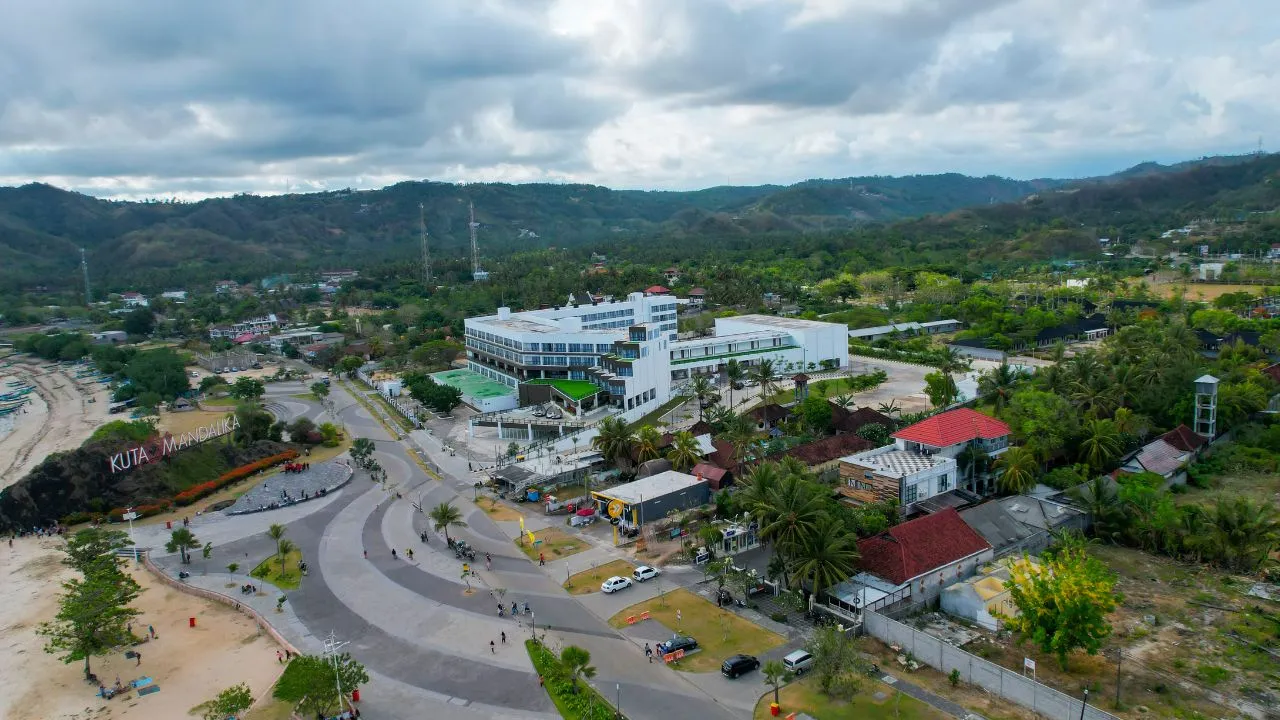
In Lombok, individual foreigners have more options. You can hold Hak Pakai in your own name for qualifying residential property.
A foreign national who holds Hak Pakai in their own name may apply directly for the PBG and SLF.
For commercial development, a foreign investor can use HGB through a PT PMA, with the PT PMA holding the land rights. SHMSRS also provides a strata title option for eligible apartment or condominium units.
Local zoning rules differ by island. In Bali, you must follow the provincial RTRW and protections under Perda 4/2026. In Lombok, the West Nusa Tenggara provincial plan and local RDTRs apply.
If you are comparing property ownership between the two islands, ILA’s Lombok real estate guide provides further detail on the land title options available to foreign buyers and how they affect property ownership in Lombok.
Who Can Apply for a PBG or SLF?
Your eligibility depends on the land rights and ownership structure. For property in Bali, the applicant can be:
- An Indonesian citizen holding SHM (Hak Milik).
- An Indonesian landowner working with a foreign property owner under a lease arrangement.
- A PT PMA holding land under HGB.
- In Lombok, a foreign individual holding Hak Pakai for qualifying residential property.
Only the legal holder of the land rights can submit the building permit application. Make sure your ownership structure is clear and documented before starting the PBG and SLF process.
Navigating PBG and SLF Requirements
For foreign property owners, the PBG and SLF process involves more than submitting an application through SIMBG. You also need to ensure your land rights, zoning, technical documents, and approvals are in order first.
ILA Global Consulting can support you by reviewing your ownership structure, bringing in certified architects and engineers, preparing the technical documents you need, and handling your submissions through SIMBG and OSS.
If you own a building that was finished without a PBG, starting the regularization process now can help protect your legal status and rental income. Schedule a consultation with ILA to review your situation before you hire architects, buy land, or set a construction date.
Frequently Asked Questions
Yes, if your building was completed before 2021 and the IMB remains unmodified. However, you cannot renew an expired IMB. Any renovation, expansion, or change of use now requires a PBG rather than an update to the previous IMB.
Not in Bali. A PT PMA holding an HGB or a cooperating Indonesian landowner must submit the application. In Lombok, a foreigner holding Hak Pakai on qualifying residential property can apply directly because Hak Pakai is a land title eligible for personal ownership by eligible foreign property owners.
The SIMBG processing period for a complete PBG application is approximately 14 to 30 working days. The complete process from KKPR through soil testing, environmental clearance, technical drawings, and PBG approval typically takes around 75 working days. Property owners should therefore budget approximately three to four months for the process from start to finish.
Your PBG or SLF is deemed granted, and OSS must issue proof with the same legal validity as a manually approved license. This does not eliminate the risk of a later audit, so your underlying documentation must still be accurate and complete.
No. Fiktif positif protects you against processing delay, not against incomplete or inaccurate applications. Post-approval audits under PP 28/2025 can revoke a deemed-approved license if the audit finds the submission was not genuinely compliant.