Table of Contents
ToggleIndonesia is actively attracting remote workers and digital nomads who are looking to relocate and potentially change their tax residency. Competing with destinations like Thailand, Indonesian immigration now offers several visa options for individuals who want to live in the country while working remotely.
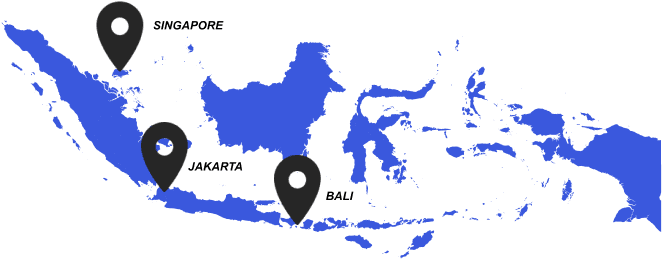
While Bali has long been the most popular destination for digital nomads, emerging locations such as Lombok are increasingly attracting remote workers and families seeking a quieter lifestyle in Indonesia.
KITAS for Digital Nomads and Remote Worker (E33G Visa)
For individuals planning to live and work remotely in Indonesia for a certain period, the E33G remote worker visa is one of the most suitable options.
This visa grants a temporary stay permit (KITAS), allowing foreigners to stay in Indonesia for up to one year. It is designed for those working remotely for overseas companies or operating as freelancers with clients based outside Indonesia.
The KITAS also includes a multiple re-entry permit, meaning visa holders can freely enter and exit Indonesia during its validity period.
Requirements for the E33G Visa:
To apply, applicants must provide:
- A passport with at least 6 months validity
- A recent colored photograph
- Proof of income of at least USD 60,000 per year
- A bank statement showing a minimum balance of USD 5,000 over the last 3 months
This visa allows holders to travel and live anywhere in Indonesia. However, they must have a registered address, which must be updated whenever they relocate. This process is known as KITAS address mutation.
Application Process: Offshore vs Onshore
Applicants can apply for the E33G visa either offshore or onshore.
- Offshore application:
The applicant applies while outside Indonesia and enters the country once the visa is issued. The KITAS is then granted upon arrival. - Onshore application:
The applicant converts an existing visa into a KITAS. This process includes applying for a bridging visa and completing biometric registration at the immigration office.
Tax Residency for Digital Nomads in Bali and Lombok
Obtaining a KITAS is the first step toward becoming a tax resident in Indonesia, but additional administrative steps are required.
Key Steps to Obtain Tax Residency:
- Register for a tax identification number (NPWP)
- Complete civil registration (SKTT)
- Submit an annual tax declaration
The NPWP is a personal tax number issued by the local tax office (KPP) and remains valid until officially deregistered.
The SKTT is a civil registration document that provides a NIK (civil identification number). It is obtained after securing a domicile letter and completing police registration. This document is often required for KITAS renewal.
Tax declarations must be submitted annually between January and March of the year following the NPWP registration year. This process is essential to confirm your tax residency status in Indonesia and demonstrate compliance with local regulations.
All of these administrative steps can be completed in Bali, Lombok, or any region where the individual resides.
Common Mistakes Digital Nomads Should Avoid
Holding a KITAS alone is not enough to ensure full compliance. Digital nomads must follow all administrative and legal requirements when living in Indonesia:
Holding a KITAS alone is not enough to ensure full compliance. Digital nomads must follow all administrative and legal requirements when living in Indonesia.
Important Restrictions:
- KITAS renewal is not automatic
- Working for an Indonesian company is prohibited
- Earning additional income locally is not allowed
- Subletting or renting out part of your villa is not permitted
- Promoting services or work publicly (e.g. on social media under your name) can lead to issues
- Operating a rental business (e.g. Airbnb) requires a PT PMA (foreign-owned company)
Administrative Requirements Often Overlooked:
- Passport mutation:
If you renew your passport, you must update your passport details on your KITAS - Address mutation:
Your registered KITAS address must always match your actual residence - Tax exemption compliance:
Tax benefits for digital nomads are not automatic. Eligibility depends on your job type and contribution to the Indonesian economy
Need Assistance with Your Visa or Tax Setup?
At ILA Global Consulting, we support digital nomads relocating to Bali, Lombok, and across Indonesia by ensuring full compliance with visa, tax, and administrative requirements.
For more updates, guides, and insights, explore our visa and immigration blog or contact our team for personalized assistance.