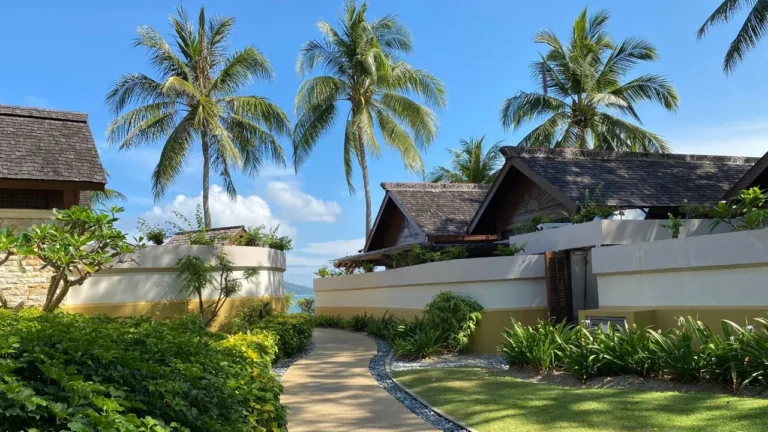
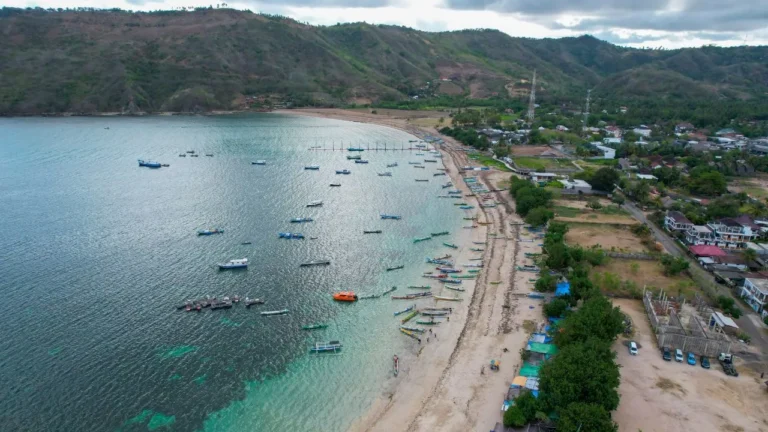
For the first time in our history, we have conducted more property transactions in Lombok than in Bali.
The trend we first observed two years ago is now supported by the transaction activity and investor interest we continue to see today. Investor demand for Lombok has increased significantly, as reflected in both the transactions we handle and the inquiries we continue to receive.
At the same time, Bali’s tourism sector has slowed down. Tourist arrivals declined in April 2026 and showed limited signs of recovery in May. The recent crisis in the Middle East and rising flight costs have contributed to this decline. Still, these reasons do not fully explain why Lombok continues to attract investment and property transactions at a growing pace.
Besides tourism numbers, investors are paying more attention to infrastructure, market crowding, new rules, and long-term growth prospects when choosing where to invest.
This article looks at the main factors shaping both markets and explains why more investors are considering property opportunities outside Bali in Indonesia.
What Is Currently Influencing the Property Market?
Several factors are currently shaping investment decisions in Bali and Lombok, from tourism trends and infrastructure development to legal changes and market saturation.
The Reputation Challenge

In recent months, Bali has received more negative publicity. While tourists and expatriates sometimes cause incidents that draw attention, the way these events spread on social media has worsened the perception problem.
The reality is that rule violations by tourists occur in many destinations around the world, from Thailand and Vietnam to France and the United States. However, in Bali, these incidents often become highly visible and widely shared online, which can affect the island’s international image.
Many investors believe that better enforcement, safer roads, and practical policies are more effective than focusing on single incidents on social media. Leading by example, reinforcing compliance, and improving enforcement may do more to preserve Bali’s long-term appeal.
The Infrastructure Issue
Infrastructure remains one of Bali’s major challenges and often fails to meet the expectations of investors and residents, especially given the area’s rapid development.
For those who regularly travel between Jakarta and Bali, it is becoming increasingly apparent that Jakarta has invested far more heavily in transportation infrastructure. Jakarta still gets crowded during peak times. Outside of rush hour, however, its transport networks usually make it easier to get around.
Bali continues to face congestion in many areas due to population growth, tourism, and road networks not designed to support the current pace of development. Fixing these problems may require new infrastructure projects and land acquisition, similar to what has been done for toll roads and the high-speed rail in Java. Big decisions, however, often involve different groups with competing interests. That tends to significantly slow down large infrastructure projects.
Projects like the planned road connection between Jimbaran and Uluwatu and new water transport plans are promising, but they probably will not fix the bigger problem on their own.
Waste management also remains a challenge. International media coverage of landfill and plastic waste issues has affected Bali’s image and continues to raise concerns about long-term environmental sustainability.
| Term | Definition |
|---|---|
| Land Acquisition | The legal process by which government authorities acquire private land for public infrastructure projects, such as roads, ports, railways, or utilities. |
| Infrastructure Development | Large-scale public investment in transportation, utilities, and public facilities intended to support economic growth and population expansion. |
A Saturated Market
To be perfectly honest, we are witnessing the early signs of market saturation. Thousands of residential units and holiday villas are currently under construction, with a significant amount of new inventory expected to enter the market over the coming months and into next year. As competition increases, rental yields have started to soften and may continue to face pressure.
Properties in top locations can still offer good returns, especially when managed by experienced companies. Still, investors need to be more careful and selective when looking at new opportunities.
The Quality of Construction
Many new developers have entered the market recently without an established track record or enough completed projects to evaluate long-term durability.
At the same time, Bali has attracted experienced professionals from markets such as Dubai, Europe, and Australia, bringing higher construction standards and greater expertise. However, many projects remain too new to properly assess how they will perform over time.
To mitigate risk, investors should carefully review project timelines, delivery schedules, legal agreements, penalty clauses, and structural warranties before committing to any development. These protections remain essential in any property investment.
| Term | Definition |
|---|---|
| Market Saturation | A market condition where the supply of properties approaches or exceeds demand, making it harder for new projects to achieve strong occupancy rates or price growth. |
| Inventory | The total number of completed or planned properties available for sale or rent within a market. |
| Rental Yield | The annual rental income generated by a property expressed as a percentage of its purchase price or market value. |
| Structural Warranty | A contractual guarantee covering defects in key structural elements of a building for a specified period after completion. |
| Penalty Clause | A contract provision requiring compensation if a party fails to meet agreed obligations, such as construction or handover deadlines. |
A Legal Framework Creating Uncertainty
As if the previous concerns were not enough, recent regulatory developments have created additional uncertainty for both developers and investors.
Some business activities in Bali now face new limits on establishing PT PMA, especially in sectors considered low- or medium-risk. This affects certain property-related activities that once attracted many foreign investors.
As a result, some investors are reconsidering how they structure their investments. Others are questioning whether Bali remains the most suitable location for future projects. The regulatory changes have created broader challenges for legitimate investors seeking clear legal structures. Non-compliant developments and unauthorized construction are not the only targets. The rules are now affecting investors who are doing everything right.
This creates a paradox. Bali continues to promote itself as a destination for international investment, while certain regulatory developments are making access more complex for foreign investors.
Bali Is Shivering, and Lombok Is Booming

While Bali faces increasing competition and regulatory challenges, Lombok is attracting growing investor attention for stronger growth prospects and a less saturated market.
A More Advantageous Legal Framework
Lombok offers more opportunities through HGB structures, while many transactions in Bali continue to rely on leasehold arrangements.
Unlike Bali, Lombok continues to allow PT PMA establishment across the island, and many zoning classifications support property rental activities and tourism-related developments.
Less Competition and More Tourists
Lombok continues to benefit from growing visitor numbers, supported by direct flight connections from Singapore, Malaysia, Jakarta, and other strategic markets.
Combined with lower market saturation and a more measured development pipeline, the investment case for Lombok becomes increasingly compelling.
| Term | Definition |
|---|---|
| HGB (Right to Build/Hak Guna Bangunan) |
A land title granting the legal right to construct and own buildings on land for a fixed period, with possibilities for extension and renewal. |
| Leasehold | A property arrangement where a person acquires the right to use land or property for a defined period without owning the underlying land. |
| Zoning Classification | Government land-use regulations that determine which activities, developments, or business operations are permitted in a particular area. |
The Investment Thesis: Where Is Capital Best Positioned?

As one experienced developer in Bali recently said, capital does not disappear. It reallocates.
Bali remains Indonesia’s most established property market and offers good opportunities in prime locations. But investors now face more competition, infrastructure issues, uncertain regulations, and more new developments coming onto the market.
Lombok offers a different kind of opportunity. A more stable legal environment, broader development opportunities, increasing tourism, and lower market saturation are attracting growing investor interest.
For investors seeking capital appreciation and stronger growth potential over the next five to seven years, Lombok is increasingly viewed as a primary target for property investment in Indonesia.
Property investment should not be based only on expected profits. Legal structure, zoning compliance, ownership rights, licensing requirements, and long-term market conditions are all important to protect your investment.
ILA Global Consulting assists investors with property due diligence, legal reviews, PT PMA structuring, licensing, and real estate advisory services across Bali, Lombok, and other regions of Indonesia.
Contact ILA Global Consulting to discuss your investment objectives and evaluate the most suitable property opportunities for your portfolio.
Frequently Asked Questions
Several factors are driving this shift. Bali is showing early signs of market saturation, with thousands of residential units and holiday villas currently under construction. Rental yields have started to soften as competition increases. At the same time, recent regulatory changes have created additional uncertainty for foreign investors, particularly around PT PMA establishment in certain sectors. Lombok, by contrast, offers lower market saturation, a more stable legal environment, growing tourist arrivals, and broader development opportunities.
Bali remains Indonesia’s most established property market. Properties in prime locations can still offer good returns, especially when managed by experienced companies. However, investors now need to be more selective. Infrastructure challenges, market crowding, construction quality concerns, and regulatory uncertainty mean that due diligence is more important than ever. Committing to any development without a thorough review carries more risk today than it did a few years ago.
Lombok offers more opportunities through HGB (Hak Guna Bangunan) ownership structures. Many transactions in Bali continue to rely on leasehold arrangements, which carry different risks and limitations. Lombok also continues to allow the establishment of PT PMA across the island. Zoning classifications there generally support property rentals and tourism-related developments, providing foreign investors with clearer, more straightforward legal pathways.
Recent regulatory changes have imposed new limits on PT PMA establishment in Bali, particularly in sectors classified as low- or medium-risk. This includes certain property-related activities that previously attracted significant foreign investment. As a result, some investors are reconsidering how they structure their investments. Others are evaluating whether Bali remains the most suitable location for future projects altogether.
Beyond expected returns, you should carefully review project timelines, delivery schedules, legal agreements, penalty clauses, and structural warranties before committing. Legal structure, zoning compliance, ownership rights, and licensing requirements are all critical to protecting your investment. Many new developers have entered the market without an established track record. Evaluating completed projects and assessing long-term durability before committing is strongly recommended.
For investors seeking capital appreciation and stronger growth potential, Lombok is increasingly viewed as a primary target over a five to seven-year horizon. Direct flight connections from Singapore, Malaysia, and Jakarta continue to grow. Combined with a less saturated development pipeline and increasing tourist arrivals, the medium to long-term investment case for Lombok is becoming increasingly difficult to ignore.