Operating a foreign-owned limited liability company (PT PMA) in Bali, Lombok, or elsewhere in Indonesia requires ongoing compliance. These obligations apply regardless of whether the company is generating income.
A common misconception among investors is that reporting and compliance are only necessary once the business operates or the property produces income. This is not true.
In 2026, Indonesia continues to strengthen corporate oversight, particularly in digital reporting, licensing, and corporate governance. Whether your company is still in the pre-revenue construction phase or already operating, missing compliance deadlines can result in suspended business licenses, restricted access to government systems, or other administrative sanctions.
This guide explains the compliance obligations every PT PMA must follow in 2026, including reporting requirements, tax filings, corporate governance, and annual deadlines.
1. LKPM (Investment Activity Report)
The Laporan Kegiatan Penanaman Modal (LKPM) enables the government to monitor whether your company is fulfilling the investment commitments declared at the time of incorporation.
- Who files: All PT PMAs must submit LKPM reports quarterly through the OSS (Online Single Submission) system.
- What to report: You must classify and report your investment realization, separating Fixed Capital (machinery, equipment, renovations, and production facilities) from Working Capital (salaries, utilities, rent, and other operational expenses). Employee headcount and production activities must also be reported.
- Pre-operations: If commercial operations have not yet started, you must still submit LKPM under the “Construction Phase,” reporting activities such as feasibility studies, licensing costs, and land preparation.
- The penalty: Missing the reporting deadline triggers an escalating administrative warning process (SP1, SP2, and SP3). Continued non-compliance may result in the suspension or revocation of your Business Identification Number (NIB) and other business licenses. Because LKPM reporting forms part of Indonesia’s OSS-based compliance framework, failure to report may also affect future licensing and other administrative processes conducted through OSS.
2. Corporate Annual Tax Report
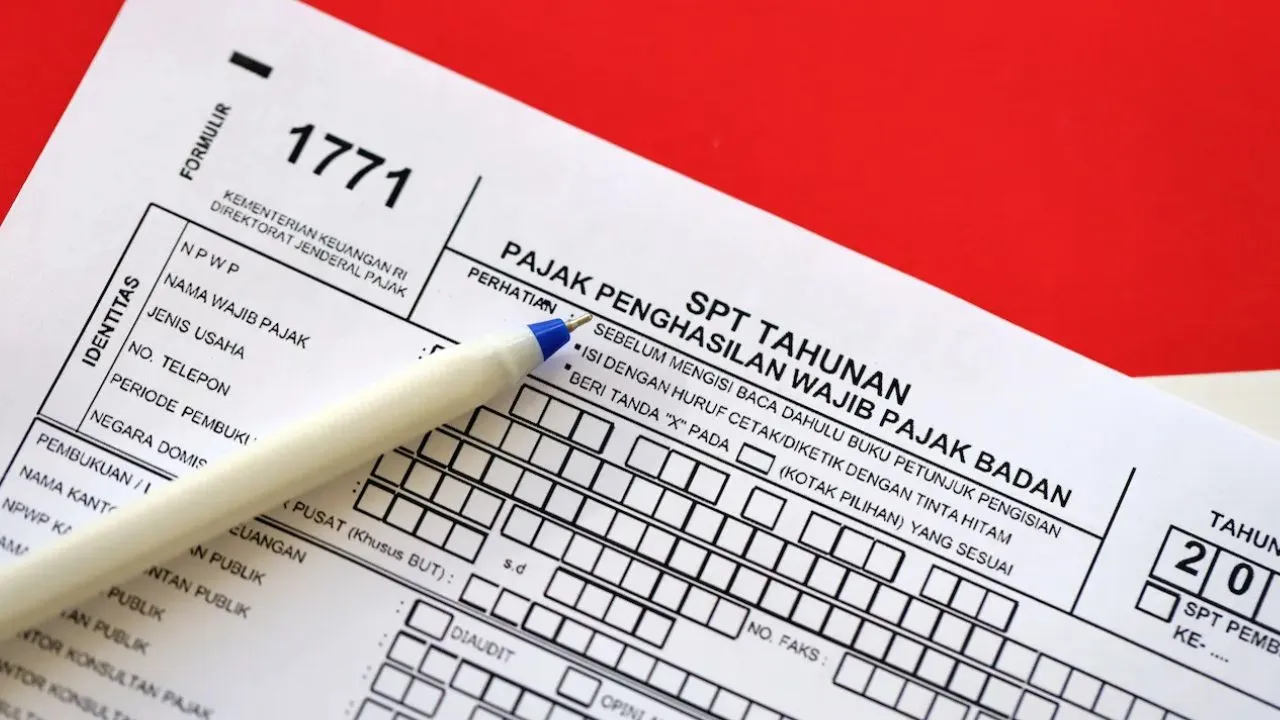
Every PT PMA must submit its SPT Tahunan Badan (Annual Corporate Income Tax Return) no later than four months after the end of its financial year.
- The requirement: Your company must submit its corporate financial statements, corporate income tax calculations, and disclosures for any related-party transactions.
- Tax rate: Indonesia’s standard Corporate Income Tax (CIT) rate is 22%.
- Audit status: Even if your company is not legally required to prepare audited financial statements, the tax authorities still expect properly maintained accounting records, reconciled financial statements, and accurate accounts receivable and payable records.
| Term | Definition |
|---|---|
|
NIB (Business Identification Number) |
Indonesia’s primary business registration number issued through the OSS system, serving as a company’s legal identity for licensing and regulatory compliance. |
| Investment Realization | The actual capital invested or spent during the reporting period, excluding planned or projected investments. |
| Related-Party Transactions | Transactions conducted between companies or individuals that have ownership, management, or other controlling relationships. |
| Tax Resident | An individual treated as a resident for tax purposes and therefore generally subject to Indonesian tax on worldwide income. |
3. Director’s Personal Tax Report
Directors cannot hide behind the corporate entity. Any director of a PT PMA who holds an Indonesian Tax Identification Number (NPWP) must submit an SPT Tahunan Orang Pribadi (Personal Annual Tax Return).
- Foreign directors: Expatriates who reside in Indonesia for more than 183 days within a 12-month period are generally considered Indonesian tax residents. They are required to report their worldwide income and assets, not only their Indonesian salary.
- Filing deadline: Personal income tax returns must be submitted one month before the corporate income tax return deadline.
4. Annual GMS and Mandatory Notarization (2026 Update)
In the past, many small PT PMAs treated the Annual General Meeting of Shareholders (AGMS) as a routine formality. As of 2026, this is no longer sufficient.
Under the Minister of Law Regulation (Permenkum) No. 49 of 2025, corporate governance requirements have changed significantly.
- Mandatory digital submission: The Annual Report and AGMS resolution can no longer simply be kept as internal company records. They must be notarized and uploaded to the government’s SABH/AHU Online system.
- Beneficial ownership: Companies must disclose their beneficial ownership information as part of the submission.
- The penalty: Failure to comply may result in the government blocking your company’s AHU Online account. Without access, your company cannot amend its Articles of Association, appoint or replace directors and commissioners, change its capital structure, or complete other corporate restructuring until your company restores compliance.
| Term | Definition |
|---|---|
| AGMS (Annual General Meeting of Shareholders) | The mandatory annual meeting where shareholders approve financial statements, appoint or reappoint directors, and make key corporate decisions. |
| SABH/AHU Online | The Ministry of Law’s online corporate administration system used to register company legal documents, corporate changes, and annual reporting obligations. |
| Beneficial Owner | The individual who ultimately owns or controls a company, even if ownership is held indirectly through other legal entities or nominees. |
5. Monthly Tax Reports for Regulated Activities
Depending on your company’s KBLI classification, monthly tax obligations may vary. Businesses operating in the hospitality, wellness, and real estate sectors are generally subject to the following taxes:
| Tax Type | Applies To | Rate & Mechanics |
| PBJT (Local Tax) | Restaurants, cafes, spas, entertainment | Up to 15% added to the customer’s bill; paid to the regional/local government, not the national tax office. |
| PPh 4(2) | Office, land, or building rentals | 10% final withholding tax deducted from the rent you pay the landlord. |
| PPh 21 | Employee salaries and director fees | Progressive rate based on income; deducted via payroll. |
| PPh 23 | Domestic services, vendor payments | 2% withholding tax deducted before paying service providers. |
Monthly taxes are generally payable by the 10th or 15th of the following month, with the corresponding tax returns typically filed by the 20th.
6. BPJS (Social Security and Healthcare)
Indonesia operates a mandatory two-tier national social security system consisting of BPJS Kesehatan (Healthcare) and BPJS Ketenagakerjaan (Employment and Social Security).
- Leadership inclusion: A common misconception is that BPJS only applies to employees. In fact, directors and commissioners must also be enrolled, and the required contributions must be paid.
- Foreign nationals: Foreign employees working in Indonesia for more than six months are generally required to participate in both BPJS programs.
- Funding: Contributions are shared between the employer and the employee. The employer pays the larger portion, while the employee’s share is deducted from their monthly salary.
7. Mandatory Accounting and Bookkeeping Standards

A common mistake among newly established PT PMAs is assuming that basic Excel spreadsheets are sufficient for compliance. Under Indonesian Company Law and tax regulations, every PT PMA is legally required to maintain proper accounting records.
- Language and currency: By default, accounting records must be maintained in Indonesian Rupiah (IDR) and prepared in Bahasa Indonesia.
- Foreign currency exceptions: If your business needs to maintain its books in U.S. Dollars or English, which is common for export-oriented companies or foreign subsidiaries, you must first obtain approval from the Ministry of Finance. This cannot be done without formal authorization.
- Accounting standards: Financial statements must be prepared in accordance with the Indonesian Financial Accounting Standards (Standar Akuntansi Keuangan or SAK).
- Audit requirements: Although not all PT PMAs are required to undergo a financial audit, Indonesian Company Law requires an independent audit by a public accountant if the company meets certain thresholds. For example, this generally applies where total assets or annual gross revenue exceed IDR 50 billion. Certain industry-specific licenses or foreign parent company policies may also require audited financial statements regardless of revenue.
- Record retention: Accounting records, invoices, ledgers, and supporting documents, including bank statements and contracts, must be retained in Indonesia for at least 10 years.
At a Glance: Key 2026 Deadlines
| Compliance Requirement | Deadline | Description |
| Q4 LKPM Report | January 15 | Final quarter investment realization report for the previous year due via OSS. |
| Director’s Personal Tax Return | March 31 | Deadline for filing the SPT Tahunan Orang Pribadi for directors holding an NPWP. |
| Q1 LKPM Report | April 15 | First quarter investment realization report due. |
| Corporate Annual Tax Return | April 30 | Deadline to file the SPT Tahunan Badan and submit corporate financial statements. |
| Annual GMS & AHU Upload | June 30 | Deadline to hold the Annual General Meeting of Shareholders and upload the notarized report to the AHU Online system. |
| Q2 LKPM Report | July 15 | Second quarter investment realization report due. |
| Q3 LKPM Report | October 15 | Third quarter investment realization report due. |
Managing Your PT PMA Compliance
Maintaining a PT PMA requires regular attention to reporting, tax filings, and corporate governance. Consistent compliance with these obligations keeps your business in good standing and prevents avoidable administrative problems.
At ILA Global Consulting, we assist foreign investors with PT PMA compliance, corporate reporting, tax obligations, and regulatory matters across Indonesia.
Contact ILA Global Consulting to discuss your PT PMA compliance requirements and ensure your company remains compliant year-round.
Frequently Asked Questions
Technically, yes, but it is rarely advisable. Indonesian compliance involves multiple overlapping systems, including OSS, Coretax, AHU Online, and BPJS. Each has its own deadlines, formats, and filing requirements. Missing one deadline can trigger a chain of administrative sanctions that affect your other licenses. Most foreign investors find that the cost of a local consultant is significantly lower than the cost of resolving compliance issues after the fact.
Fixed Capital covers physical investments such as machinery, equipment, renovations, and production facilities. Working Capital covers operational costs such as salaries, utilities, and rent. You must report both categories separately in your quarterly LKPM submission. Misclassifying them is a common error that can create discrepancies between your declared investment plan and your actual realized figures.
Not always. Your company needs an independent audit if total assets or annual gross revenue exceeds IDR 50 billion. Specific industry licenses or a foreign parent company’s internal policies may also require audited statements regardless of revenue. Below those thresholds, the tax authorities still expect properly maintained accounting records and reconciled financial statements, even without a formal audit.
Only with formal approval from the Ministry of Finance. By default, your company must maintain all accounting records in Indonesian Rupiah and prepare them in Bahasa Indonesia. Export-oriented businesses and foreign subsidiaries can apply for authorization to use a foreign currency. Operating in a foreign currency without that approval is a compliance violation, regardless of your ownership structure.
A minimum of 10 years. This applies to all accounting records, invoices, ledgers, bank statements, and supporting contracts. This is a legal requirement under Indonesian Company Law and is relevant during a tax audit. Digital records are acceptable but must be complete, traceable, and accessible to the tax authorities upon request.