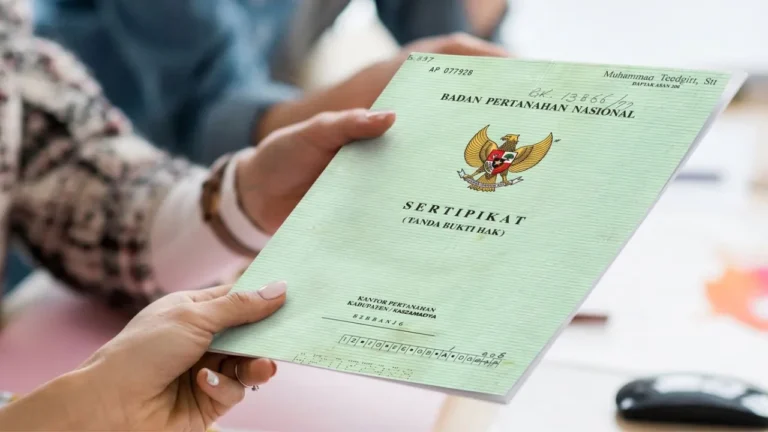
Property tax in Lombok is an important consideration for foreign investors planning the total cost of acquiring and owning property.
Different taxes apply when you buy, own, rent, or sell property in Lombok. Your tax obligations depend on whether you hold the property personally, by lease, or through a PT PMA.
This guide explains the taxes you pay at each stage of ownership, common mistakes that cost foreign investors in Lombok, and how your ownership structure affects your tax liability.
What Taxes Apply When You Buy Property in Lombok?

When you buy property, your tax liability is determined by the land title you are acquiring. If you choose Hak Pakai, HGB, or SHMSRS, you acquire registered land rights and must pay BPHTB (Bea Perolehan Hak atas Tanah dan Bangunan).
BPHTB is a one-time tax the buyer pays when the land right is transferred. The rate is 5% of the transaction value or the NJOP (government-assessed value) minus the applicable non-taxable threshold (NPOPTKP).
VAT (Value Added Tax) of 11% to 12% applies when purchasing a new or off-plan property directly from a developer registered as a taxable entrepreneur (PKP). It generally does not apply to leasehold transactions between individuals.
| Tax | Typical Rate/Basis | Who Generally Pays | When It Applies |
| BPHTB | Generally 5% of taxable acquisition value after NPOPTKP | Buyer/acquirer | Acquisition of qualifying land/building rights |
| VAT | Statutory rate 12%; special DPP rules may produce an effective 11% burden for qualifying non-luxury transactions | Buyer | Certain taxable property sales by PKP |
| PBB-P2 | Local rate and taxable base determined under regional rules; statutory maximum rate 0.5% | Taxpayer associated with the taxable property | Annually |
| PPh Final: rental | 10% of gross land/building rent | Property owner/lessor; withholding mechanism depends on tenant | Rental income |
| PPh Final: sale | Generally 2.5% of gross transfer value for ordinary taxable transfers | Seller/transferor | Transfer of qualifying land/building rights |
| Corporate Income Tax | Generally 11% of ordinary taxable income, subject to applicable facilities | PT PMA | Corporate income outside final-tax regimes |
Before you sign, get written confirmation on whether the quoted purchase price includes VAT. When developers advertise ‘all-in’ pricing, they usually mean their own taxes are covered. Your VAT liability is often separate.
What Taxes Apply While You Hold Property in Lombok?
PBB-P2 (Pajak Bumi dan Bangunan Perdesaan dan Perkotaan) is an annual local property tax. The tax is calculated using the property’s NJOP after applying the NJOPTKP and taxable-base percentage under current regional tax rules.
The statutory maximum PBB-P2 rate is 0.5%, but the actual rate and taxable-base percentage are determined by the relevant local government. This means the annual PBB bill can vary by jurisdiction and property in Lombok.
Before purchasing, request the property’s latest SPPT (Tax Due Notification Letter) PBB and payment history instead of estimating the tax from the purchase price or market value.
What Taxes Apply If You Rent Out Property in Lombok?
Rental income tax in Lombok depends on your residency status and ownership structure.
- Indonesian tax residents and PT PMA structures pay a 10% final tax on gross rental income from land and buildings.
- Non-resident foreigners without an Indonesian tax number face a 20% withholding tax on income sent overseas, which the property manager deducts before transferring funds. A Double Tax Treaty between Indonesia and your home country may reduce this rate.
- PT PMA structures also pay standard Corporate Income Tax on overall company profit (22%, or 11% for companies with annual turnover below IDR 4.8 billion), separate from the 10% final tax on rental income. Dividends distributed may be taxed again when paid to shareholders.
A foreigner holding property personally under Hak Pakai or leasehold generally cannot list it commercially on platforms like Airbnb.
To operate a short-term rental business legally, you need a PT PMA with the appropriate KBLI licensing because Indonesian regulation treats commercial hospitality as a business, not a personal transaction.
| Term | Definition |
|---|---|
| Withholding Tax | A tax collected by deducting the applicable amount from a payment before the income is transferred to the recipient. The party making the payment may be responsible for withholding and remitting the tax to the tax authority. |
| Double Tax Treaty (DTT) | An agreement between two countries that allocates taxing rights over cross-border income and provides mechanisms to prevent or reduce double taxation. |
What Taxes Apply When You Sell Property in Lombok?
PPh Final is a mandatory income tax on property sales in Indonesia. The seller pays 2.5% of the higher amount between the gross selling price and the NJOP. It applies whether you sell at a profit or not, regardless of ownership structure, including sales through a nominee arrangement.
The notary cannot finalize the ownership transfer at the land office until PPh Final is paid. Some developers or sellers may ask buyers to contribute to this tax. Approach this carefully. Side agreements to reduce the seller’s declared transaction value are illegal and can cause serious problems if a dispute arises later. We can help you manage the required tax and documentation before the property transfer is finalized.
If you plan to send sale proceeds back to your home country, Indonesian banks usually require proof you have met all local tax obligations before allowing the transfer.
Common Tax Mistakes That Cost Foreign Investors in Lombok

Most tax issues foreign buyers face in Lombok stem from a handful of common mistakes.
Choosing the Correct Basis for BPHTB Calculation
BPHTB is calculated on the higher of the transaction value or NJOP, not simply the lower NJOP by default.
If you assume NJOP always applies, you risk underpaying and may face penalties, interest, and delays in transferring your certificate when the error is discovered.
Using a Nominee Structure Without a Tax Plan
Nominee arrangements, where an Indonesian citizen holds legal title on behalf of a foreigner, create tax exposure because the legal owner and beneficial owner are different people.
This arrangement complicates reporting for capital gains, inheritance, and resale. Indonesian tax authorities are increasingly alert to undeclared nominee structures.
Using a PT PMA gives you a legal, transparent ownership structure with clear reporting requirements. This avoids the risks and complications of informal nominee arrangements.
For more information on establishing a foreign investment company, see ILA Global Consulting’s PT PMA guide.
Assuming Tax Obligations Reset With Each Sale
Outstanding PBB or other tax liabilities stay with the property, not the previous owner.
Check the property’s tax payment history as part of your due diligence to avoid inheriting someone else’s tax debt.
Failing to Record Property in Your PT PMA’s Accounts
If your PT PMA owns property, you must include the asset in your annual tax filings and LKPM reports.
Any mismatch between land registry records and your company’s reported assets can trigger a tax audit.
See ILA Global Consulting’s LKPM report guide for more information on LKPM reporting requirements.
| Term | Definition |
|---|---|
| Beneficial Owner | The individual who ultimately owns, controls, or benefits from an asset or arrangement, even when the legal title or formal ownership is held by another person or entity. |
| Tax Audit | A formal examination by the tax authority of a taxpayer’s records, transactions, and tax compliance to determine whether tax obligations have been correctly reported and paid. |
| Due Diligence | A review conducted before a transaction to verify relevant legal, financial, tax, ownership, and other information and identify potential risks or outstanding obligations. |
Which Ownership Structure Is More Suitable for Your Investment?
The right structure depends on what you intend to do with the property.
If you plan to live in the property, holding Hak Pakai in your name keeps your tax obligations straightforward. You pay PBB each year, BPHTB when you buy, and PPh Final if you decide to sell.
If you intend to earn rental income, using a PT PMA to hold HGB provides a clear legal path for commercial operations. This structure requires you to meet corporate tax requirements, submit annual reports, and comply with LKPM regulations.
ILA Global Consulting helps investors choose the right ownership structure for their goals, verify a property’s tax history during due diligence, and manage ongoing tax and reporting obligations of owning property in Lombok, whether personally or through a PT PMA.
Before you commit to a structure or sign a purchase agreement, consult ILA Global Consulting. We ensure your investment is set up for long-term success.
Frequently Asked Questions
Not generally. BPHTB, PBB, and PPh Final apply at the same rates regardless of nationality. The main difference is residency status: non-resident foreigners face a 20% withholding tax on rental income remitted overseas, compared to 10% for tax residents and PT PMA structures.
Yes. PBB is due annually regardless of whether the property generates income, and you must provide proof of payment before you can sell or transfer the property later.
Generally no. Commercial short-term rental activity requires a PT PMA holding the correct KBLI licensing. A foreigner holding property personally under Hak Pakai or leasehold lacks the legal basis to operate a rental business.
BPHTB is 5% of the transaction value or the NJOP, whichever is higher, minus the local NPOPTKP threshold. Basing the calculation on the lower NJOP by default is one of the most common and costly mistakes foreign buyers make.
Not automatically. A PT PMA pays standard Corporate Income Tax on overall profit (22%, or 11% for smaller companies), while rental income specifically is taxed at a 10% final rate. Whether a PT PMA reduces your overall burden depends on your rental volume, your long-term plans, and how the structure is set up.