Reviewed by Florent Delente, Founder, ILA Global Consulting. Last updated: October 2026.
Very few foreigners get a mortgage from an Indonesian bank. A bank can only take a mortgage over a registered title, which for a foreigner means a Hak Pakai house or a strata apartment above the minimum foreign price (IDR 5 billion for a house in Bali), and the handful of banks that have offered foreigner home loans also want a residence permit (KITAS or KITAP) and income they can verify. A Bali leasehold, the way most foreigners buy a villa, cannot be mortgaged at all. In practice, foreign buyers finance Bali property with money borrowed in their home country, with a developer’s instalment plan, or in cash.
This guide explains why, which banks have actually offered loans to foreigners, the 2026 rate and loan-to-value rules, and how to compare the alternatives and their risks. ILA Global Consulting is a legal and advisory firm: we do not lend money or broker loans. What we do is check the title, contracts and structure so that whatever financing you choose is secured on something you legally hold. Dollar figures use IDR 17,900 per USD (Katadata, 5 October 2026) and are approximate.
Can a foreigner get a mortgage in Indonesia?

In law, yes. In practice, rarely, and almost never for a Bali villa.
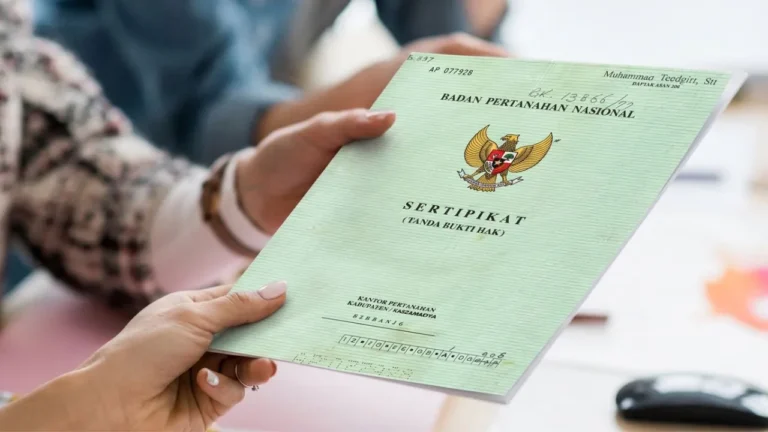
Indonesia’s mortgage instrument is the Hak Tanggungan, created by Law 4/1996. It can only be registered over a land title. Government Regulation (PP) 18/2021 confirms that a time-limited Hak Pakai, the title a foreigner can hold on a house, and a Hak Guna Bangunan (HGB), the title a company holds, can both be used as loan collateral with a Hak Tanggungan (Articles 45 and 60) (PP 18/2021). An apartment unit title can also be mortgaged.
What a bank cannot secure a loan on is a lease. A Bali leasehold is a contract with the landowner, not a land title, so it cannot carry a Hak Tanggungan. That single rule rules out bank financing for most foreign buyers in Bali, because most villas sold to foreigners are leaseholds priced below the Hak Pakai minimum.
The routes in one view:
| Financing route | Works for | Typical terms | Main advantage | Main risk |
|---|---|---|---|---|
| Indonesian bank mortgage (KPR) on Hak Pakai or an apartment | KITAS or KITAP holders with verifiable income, buying a registered title above the foreign minimum price | Bank by bank; terms usually tied to the remaining length of your stay permit | Borrow in rupiah against the asset you buy | Few banks offer it; approval is discretionary; floating rates |
| Loan in your home country (remortgage, equity release, secured personal loan) | Owners of property or a portfolio at home | Home-country rates and rules | Usually cheaper and easier to obtain | Currency risk: you repay in euros or dollars for an asset priced in rupiah |
| Developer instalment plan (off-plan) | Buyers of new villas or apartments from developers | Staged payments during construction | No bank needed | You pay before the building or the title exists |
| Staged payments to a private seller | Leasehold or resale purchases | Negotiated | Flexible | Seller default, title not transferred, deposits lost |
| Company loan to a PT PMA, secured on HGB | Existing PT PMAs with a licensed business that holds the land | Corporate credit terms | Real security for the bank | In Bali, new PT PMAs can no longer register villa rental or real estate codes |
| Private or informal lenders | Anyone | High rates, short terms | Fast | Unlicensed lending, security over a lease is weak, disputes |
| Cash | Anyone | n/a | Simplest, strongest negotiating position | Concentration of savings in one illiquid asset |
ILA’s real estate legal team reviews the title, the sale or lease contract and the security documents, whichever route you choose.
Why do Indonesian banks rarely lend to foreigners?
Five reasons, and each one is a question a bank will ask.
- No registered title. Leaseholds cannot be mortgaged. A bank has nothing to sell if you default.
- The price floor. A Hak Pakai house in Bali must cost at least IDR 5,000,000,000 (about USD 279,000), and an apartment IDR 2,000,000,000 (about USD 112,000), under Ministerial Decree (Kepmen ATR/BPN) 1241/SK-HK.02/IX/2022 (detikProperti, December 2024). The mortgage market for foreigners is therefore a luxury market.
- Your stay permit. If your KITAS lapses and you stop qualifying, you must sell or transfer the Hak Pakai within one year (PP 18/2021, Art. 50). A bank sees a borrower who may have to sell and a loan that may outlive the permit.
- Income and credit history. Indonesian banks assess borrowers through OJK’s credit information system (SLIK). A newcomer has no local record, and foreign income is hard to verify and exposed to currency moves.
- Recovery. If the bank forecloses on a Hak Pakai, the buyers it can sell to are limited to people eligible to hold that title, which makes enforcement slower.
Which banks lend to foreigners in Indonesia in 2026?
Publicly documented offers are few.
- PermataBank launched a sharia home financing product for foreign passport holders, “Permata KPR iB IMBT WNA”, in June 2025, tied to luxury apartments at the Savyavasa project in South Jakarta (Kontan, 14 June 2025). The press release gave no rate, tenor or down payment.
- CIMB Niaga announced in January 2016 that it was preparing a home loan for foreigners after the rules on foreign ownership were relaxed; BNI and BTN said they were considering the segment (Kontan, 22 January 2016). We found no current published product page for foreigners at these banks.
Two patterns follow from this. First, foreigner mortgages tend to be attached to specific developer projects, mostly apartments in Jakarta, where the developer has negotiated a financing partner. Second, outside those projects, approval is case by case at the branch. If you are buying a Hak Pakai house, ask the developer or seller which bank has already financed a foreign buyer in that project; that is the most reliable lead.
Several property websites list “banks that offer KPR to foreigners” with down payments of 30% to 50% and terms of 10 to 15 years. None that we reviewed cited a bank source, so treat those figures as unconfirmed until a bank puts them in writing.
What would a bank ask a foreign borrower for?
Based on the ownership rules and standard Indonesian mortgage practice, expect a file like this:
| Requirement | Why the bank wants it |
|---|---|
| Passport and KITAS or KITAP valid for a meaningful period | Proves you can hold the title; some banks link the loan term to the permit |
| NPWP (tax number) and tax returns | Identifies you as a taxpayer and shows declared income |
| Employment contract in Indonesia or proof of income from abroad | Repayment capacity; Indonesian salary is easier to assess |
| Bank statements, usually 3 to 6 months | Cash flow and the source of the down payment |
| A registered title: Hak Pakai house or apartment unit title | The only thing a Hak Tanggungan can attach to |
| Purchase price at or above the foreign minimum for the province | The deed must be valid for a foreign buyer |
| Building approval (PBG) and certificate of fitness (SLF) | The bank’s valuer will check them |
| Property valuation by the bank’s appraiser | Sets the loan amount |
If you need the account and tax number first, see our guides to opening a bank account and getting an NPWP.
What are mortgage rates and loan-to-value rules in 2026?
The policy rate. Bank Indonesia held the BI-Rate at 5.75% at its board meeting of 22 and 23 September 2026, the third month in a row, with the deposit facility at 4.75% and the lending facility at 6.50% (CNN Indonesia, 23 September 2026). Mortgage rates sit above the policy rate. Indonesian banks usually offer a fixed promotional rate for the first one to five years, then a floating rate based on the bank’s base lending rate plus a margin. Read the floating formula, not the headline rate.
Loan-to-value (LTV). Bank Indonesia sets the maximum share of a property’s value that banks may lend. Its relaxed policy allows up to 100% LTV on property loans for banks that meet its credit quality criteria, and this relaxation was extended to the end of December 2026 (Kontan, 2 December 2025; Bank Indonesia, macroprudential instruments). This is a ceiling, not an entitlement. A bank lending to a foreigner will set its own, much lower, LTV and ask for a substantial down payment.
An illustration. Borrowing IDR 3,000,000,000 (about USD 168,000) over 10 years at an illustrative 9% a year costs about IDR 38,000,000 a month (about USD 2,120). This is arithmetic, not a quote; your bank will give you its own rate and schedule.
How does a mortgage on a Hak Pakai work?
- Credit agreement. You sign the loan agreement with the bank.
- Deed of mortgage (APHT). You and the bank sign the deed granting the Hak Tanggungan before a land deed official (PPAT), usually on the same day as the deed of sale (AJB).
- Registration. The PPAT registers the Hak Tanggungan at the land office (BPN), which now issues it electronically. The mortgage is noted on your certificate.
- Repayment and release. When you repay, the bank issues a release (roya) and the note is removed. If you default, the bank can sell the property at public auction under Law 4/1996.
Two consequences matter. You cannot sell, transfer or re-mortgage the property without the bank’s consent. And if your residence status ends, the one-year obligation to transfer the Hak Pakai still applies, so a sale must also clear the loan.
Can a PT PMA borrow to buy property?
A foreign-owned company (PT PMA) can hold HGB and borrow from Indonesian or foreign banks against it, like any company. But a company needs a licensed business that uses the land. Since the third week of May 2026, Bali has closed real estate owned or leased (KBLI 68111), villa and other accommodation (55900) and small hotels (55110, 55120) to new PT PMAs (ANTARA, 23 July 2026). A new company set up to buy a villa and rent it out is no longer licensable in Bali. Existing licensed companies keep their licences, and companies in open sectors (restaurants, large hotels, clinics) can still finance their premises.
A PT PMA also needs IDR 2.5 billion of paid-up capital per business code under BKPM Regulation 5/2025 (Withers). Shareholder loans from abroad are possible but must be reported. See our PT PMA setup guide.
Developer payment plans: what protects you?
Off-plan purchases with staged payments are the most common “financing” in Bali. They are also where buyers lose the most money.
For a sale of houses or apartments, the Housing Law sets conditions before a developer may sign a conditional sale agreement (PPJB): certainty of the land title, the building approval, the infrastructure and facilities, and at least 20% of construction completed (Law 1/2011 on Housing, Art. 42). Ask for proof of each one.
Most Bali off-plan villas are sold as leaseholds, not sales, so the PPJB protections do not apply. Protect yourself in the contract:
- Pay into a notary escrow or against milestones certified by an independent engineer, not by calendar date.
- Check that the developer holds a registered lease or title over the land, for longer than the lease it is selling you, and that the landowner has consented to sub-leasing.
- Check the PBG before you pay the first instalment, and the zoning: since Perda Bali 4/2026, building on protected farmland (LP2B) can lead to demolition (Lingkari News, February 2026).
- Agree delay penalties, a long-stop date and a refund mechanism if the villa is not delivered.
Our due diligence team checks the developer, the land and the permits before you sign.
Is borrowing in your home country the better option?
For most foreign buyers, yes. A remortgage of your home, an equity release, or a loan secured on investments in your home country is usually cheaper and quicker than an Indonesian foreigner mortgage, and it works for leaseholds, which Indonesian banks will not finance.
Three things to manage:
- Currency risk. You repay in euros, dollars or pounds for an asset priced and rented in rupiah. The rupiah was around IDR 17,900 per USD in early October 2026. Model a 10% to 20% move in both directions.
- Purpose rules. Some home-country lenders restrict loans used to buy property abroad, or ask for proof of use. Be open with your lender; misdescribing the purpose can make the loan callable.
- Paper trail. Transfer the money from your own account to the notary or seller with a clear reference. Indonesian banks may ask for the source of funds, and the same trail protects you in a dispute.
What about private lenders and “rent-to-own” offers?
Be careful. Private loans secured on a Bali leasehold are often structured with a power of attorney or a side agreement over the lease, which is weak security for the lender and dangerous for you as borrower, because the lender may be able to take over the lease outside any court process. Offers that place the property in an Indonesian individual’s name “until you finish paying” are nominee structures. They are void under Article 33 of Law 25/2007, and under Article 26 of the Agrarian Law any indirect transfer of freehold to a foreigner is void, with no refund.
Before you borrow from any lender in Indonesia, check that it is licensed by OJK, the financial services authority (ojk.go.id).
What can go wrong with financing a Bali property?
- The bank declines after you sign. Make the purchase conditional on loan approval, with your deposit refundable if the loan is refused.
- The title cannot be mortgaged. A “Hak Pakai” that turns out to be a lease, or a certificate still “in process”, cannot be accepted by a bank.
- The price is below the foreign minimum. The deed cannot be registered in your name, so there is nothing to mortgage.
- The developer runs out of money. Staged payments on a villa that is never finished are hard to recover.
- Your permit ends. The one-year rule forces a sale, possibly at a bad time.
- The rupiah moves. A home-country loan becomes more expensive to service if rental income in rupiah falls in your currency.
How ILA helps
We do not arrange loans. We make sure the asset you are financing is legally sound and that your contracts protect you: title, zoning and permit checks, review of the PPJB, lease or developer contract, review of loan and security documents, coordination with the notary and PPAT, and the KITAS or KITAP that a bank or the land office may require. The full buying process is in our guide to buying property in Bali as a foreigner. Contact our team before you commit money to a purchase or a payment plan.
Want this guide offline? Get the free PDF version, or browse all 27 free ILA guides.
Frequently asked questions
Can a foreigner get a mortgage in Bali?
Rarely. A bank can only mortgage a registered title, so a Hak Pakai house worth at least IDR 5 billion or an apartment worth at least IDR 2 billion. Leaseholds cannot be mortgaged. Few banks offer foreigner loans, and they want a KITAS or KITAP and verifiable income.
Which Indonesian banks lend to foreigners?
PermataBank launched a foreigner home financing product in June 2025 for a specific Jakarta project. Other banks, including CIMB Niaga, announced plans in 2016 but publish no foreigner terms. Ask the developer which bank has financed foreign buyers in the project.
Can I mortgage a leasehold villa?
No. A lease is a contract, not a land title, so it cannot carry a Hak Tanggungan under Law 4/1996. Lenders who offer loans on leaseholds rely on side agreements that give weak protection to both parties.
What is the Bank Indonesia rate in 2026?
5.75%, held at the 22 to 23 September 2026 meeting. Mortgage rates are higher, usually a fixed promotional rate for the first years and then a floating rate.
Does Bank Indonesia allow 100% financing?
Bank Indonesia allows banks that meet its criteria to lend up to 100% of the property value until the end of December 2026. Banks lending to foreigners apply much stricter limits of their own.
Do I need a KITAS to get a loan in Indonesia?
In practice, yes. A tourist visa holder will not get an Indonesian mortgage. Banks also look at how long the permit remains valid.
Does ILA provide loans or mortgages?
No. ILA is a legal and advisory firm. We check the property, contracts and security documents and coordinate the notary, so the financing you arrange is secured on a title you legally hold.
Sources
- Law 4/1996 on Hak Tanggungan (mortgage over land), JDIH BPK
- PP 18/2021 on Management Rights, Land Rights, Apartment Units and Land Registration, JDIH BPK
- detikProperti: foreigners owning property in Indonesia, rules and minimum prices (21 December 2024)
- Kontan: PermataBank offers property financing to foreigners (14 June 2025)
- Kontan: CIMB prepares mortgages for foreigners, other banks to follow (22 January 2016)
- CNN Indonesia: BI-Rate held at 5.75% (23 September 2026)
- Kontan: Bank Indonesia extends 0% down payment policy to end 2026 (2 December 2025)
- Bank Indonesia: macroprudential policy instruments
- ANTARA: Bali blocks foreign investment in 18 business categories (23 July 2026)
- Withers: key takeaways from BKPM Regulation 5 of 2025
- Law 1/2011 on Housing and Residential Areas, peraturan.go.id
- Lingkari News: Bali Perda 4/2026 on farmland conversion (February 2026)
- Law 25/2007 on Investment, JDIH BPK
- Law 5/1960 on Basic Agrarian Principles, JDIH BPK
- Otoritas Jasa Keuangan (OJK), Indonesia’s financial services authority
- Katadata: rupiah at IDR 17,916 per USD (5 October 2026)