Reviewed by Florent Delente, Founder, ILA Global Consulting. Last updated: October 2026.
Foreigners can invest in Sumba property through the same three legal routes as anywhere in Indonesia: a lease from an Indonesian owner, a right to use (Hak Pakai) in their own name with a stay permit, or a right to build (HGB) held by their own foreign-owned company (PT PMA). What makes Sumba different is the land itself. Much of the island is customary (adat) land held by clans, many plots have never been certified, and a deal signed with one family member can be challenged by the rest of the clan years later. Your return depends less on the purchase price than on whether the title, the boundaries and the community’s consent hold.
This guide is for investors looking at Sumba for a private villa, a boutique resort, land for later development or an off-plan project. It covers why investors are looking at the island, how customary land works, which structure fits which plan, the due diligence that is specific to Sumba, permits and infrastructure, and the risks of each strategy. It merges two earlier ILA articles. For a title and community check on a specific plot, ILA’s real estate team and due diligence service work with notaries and land offices in Sumba.
USD figures use one rough rate, IDR 17,900 per USD (Databoks Katadata, 5 October 2026).
Why are investors looking at Sumba?

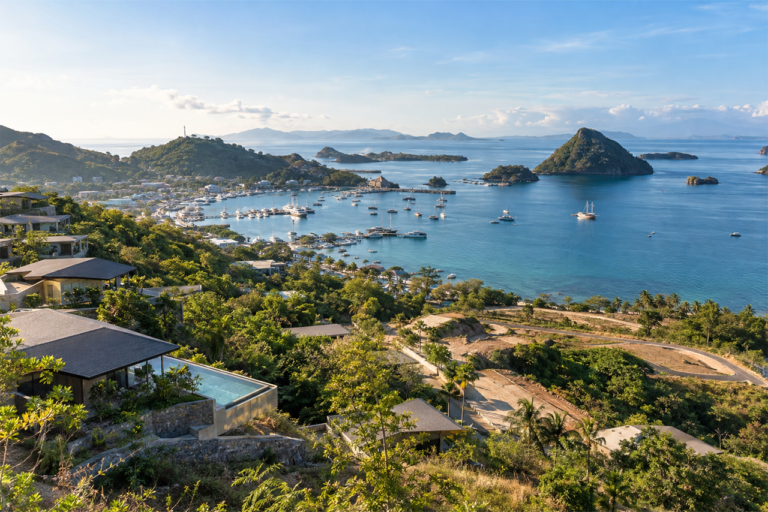
Sumba is an island in East Nusa Tenggara (NTT), about an hour’s flight east of Bali, split into four regencies: Southwest Sumba (Sumba Barat Daya), West Sumba, Central Sumba and East Sumba. Three things draw investors.
Access is improving. The island has two airports: Tambolaka in Southwest Sumba, the gateway for the south-west coast, and Umbu Mehang Kunda at Waingapu in East Sumba. Bali to Tambolaka is an established route, and on 15 July 2026 TransNusa opened Bali to Waingapu four times a week (Antara Bali, 17 July 2026). There are no international flights, so every guest comes through Bali or another Indonesian hub.
Visitor numbers are growing from a small base. NTT as a whole, which includes Labuan Bajo and Komodo, recorded 1,840,488 domestic and foreign tourist visits in 2025, against 1,559,802 in 2024, according to the provincial tourism office (Satu Data NTT). The provincial dataset does not break the figure down by regency, and Sumba’s share is far smaller than Labuan Bajo’s.
Large plots and a high-end niche. The south-west coast around Nihiwatu and Marosi has drawn surfers and high-end travellers for years, and investors can still find large coastal plots that no longer exist in Bali. That is the opportunity. The same facts (remote land, thin infrastructure, strong customary claims) are the risk.
We do not quote land prices in this guide. Prices in Sumba are negotiated plot by plot, there is no public transaction index, and asking prices change with title status more than with location.
Can foreigners own land in Sumba?
Not as freehold. Hak Milik (freehold) is for Indonesian citizens only, and arrangements where an Indonesian holds land for you are void under Article 33 of Law 25/2007. The legal routes are set by PP 18/2021.
| Lease (hak sewa) | Hak Pakai in your own name | HGB through a PT PMA | |
|---|---|---|---|
| Best for | A private villa or a first project with low commitment | A private home if you live in Indonesia | A resort, rental business, subdivision or development |
| Who holds it | You, as tenant | You, with an Indonesian immigration document (in practice a KITAS or KITAP) | Your company |
| Term | As agreed, typically 20 to 30 years | Up to 80 years in total (30 + 20 + 30) on state land | Up to 80 years in total (30 + 20 + 30) |
| Minimum price | None | IDR 1 billion for a landed house outside the provinces named in the decree | None |
| Registered at the land office | No (notarial deed) | Yes | Yes |
| Business use | Through a licensed operator or company | Residential only | Yes, with the right licence |
| Sumba-specific risk | Lessor’s title or clan consent challenged | One plot, up to 2,000 m2; not suited to large land | Converting adat or uncertified land to HGB takes time |
Sources: PP 18/2021; Hukumonline on Kepmen ATR/BPN 1241/2022.
A correction to our older article: a PT PMA does not acquire “freehold (SHM)”. When the company buys, the owner’s Hak Milik is released and the land office issues an HGB to the company. The HGB is a strong title for 80 years in total and can be mortgaged and sold, but it is not freehold, and the company must use the land as its permits allow.
How does customary (adat) land work in Sumba?
Sumbanese society is organised in clans (kabihu) linked to ancestral villages, and many families still follow the Marapu belief, in which land, graves and ritual sites are bound to the ancestors. Land is often held collectively by a clan or lineage, used by individual families, and passed down without a written title. Three consequences matter for a buyer:
- The person who sells may not be the only one who decides. A family may farm a plot, but clan elders, other branches of the family and sometimes the wider village expect a say. A signature from one household does not bind the others.
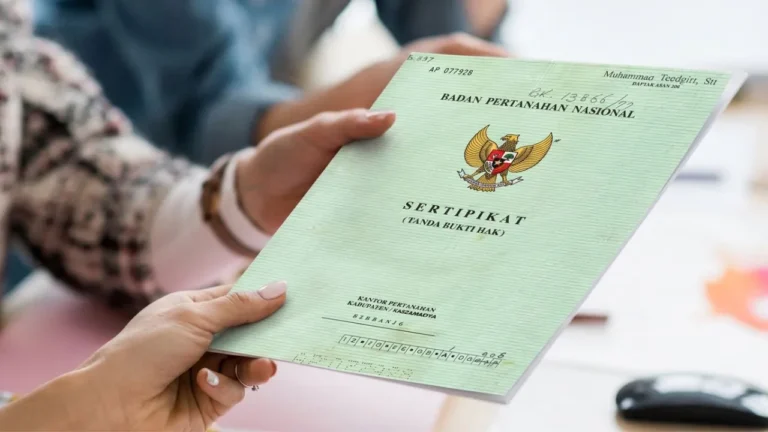
- Many plots are uncertified. The seller holds a village letter, a tax bill or nothing. First registration with the land office is possible, but it needs the community to agree on the owner and the boundaries.
- Sacred and burial sites sit on or near many coastal plots. Developing around a megalithic tomb or ritual site without agreement is a reliable way to lose community support.
The 2024 rules on customary land. Permen ATR/BPN 14/2024 sets how customary land (tanah ulayat) of customary law communities is inventoried, mapped, recorded and registered, including as a right of management (HPL) in the name of the community. Nationally, 57 HPL certificates covering 987.48 hectares had been issued to 18 customary communities between 2023 and September 2025 (Hukumonline, 27 September 2025). The same report notes that cooperation with third parties on customary land does not require HPL status, and that customary land inside state forest areas is a frequent source of disputes. For an investor, an HPL in the community’s name is the cleanest base for a long lease or a right granted on top of it. Few Sumba communities have one yet.
What happens when it goes wrong: Marosi, 2018
On 25 April 2018, at Patiala Bawah village on the Marosi coast in West Sumba, a resident named Poro Duka was shot dead by police during a land measurement carried out by the land office with a tourism investor, PT Sutera Marosi. The company claimed about 300 hectares in seven plots. Residents said the land had lain idle since 1994 and demanded the return of their customary rights; mediation by the regent had already failed (Mongabay, 7 July 2018).
The lessons are concrete. A claim to land left unused for decades will be contested by the community, whatever paperwork supports it. Measurement and boundary work needs the community present and on side. And a dispute that turns violent stops a project for years.
Which structure fits which investment plan?
- A private villa you will use yourself: a lease from a certified owner is the simplest. If you live in Indonesia on a KITAS and the plot is under 2,000 m2, a Hak Pakai gives you a registered title in your own name.
- A boutique resort or rental villas: a PT PMA holding HGB, or a PT PMA holding a long lease, with the accommodation licence in the company’s name. Unlike Bali, Sumba has not closed villa or small hotel business codes to new foreign companies; Bali’s 2026 restriction on 18 codes is Bali only (ANTARA, 23 July 2026).
- Land banking or subdivision: only through a company holding HGB, and with a plan to use the land (see the risks below).
- Partnership with a community: a long lease or cooperation agreement with the clan, ideally on land registered to the community, with benefits written in (jobs, access, revenue share). This is slower to negotiate and often more durable.
PT PMA capital in 2026. Under BKPM Regulation 5/2025, a PT PMA needs IDR 2.5 billion of paid-up capital (about USD 140,000) and an investment plan of IDR 10 billion per business code and location, and in property and accommodation, land and building costs count toward that investment value (Withers). Our older article said “authorised capital around IDR 10 billion”; that is out of date. The company needs at least two shareholders, a director and a commissioner. A foreign director does not have to live in Indonesia, but needs a work-based stay permit to work there. The full process is in our PT PMA guide and our PT PMA formation service.
What due diligence is specific to Sumba?
The standard checks apply: original certificate, land office check, encumbrances, zoning, seller identity, tax history and permits. In Sumba, add the community layer. The table below sets out the main risks and how to test them before money moves.
| Risk | How to check it | What to ask for |
|---|---|---|
| Seller is not the only rights holder | Meet the clan elders and the extended family; ask the village head who else claims the land | Written consent of all heirs and clan representatives, ideally signed in a public meeting |
| Land is uncertified | Land office check (BPN regency office); history of the claim | Complete first registration before final payment, or pay in stages tied to the certificate |
| Old certificate on land the community still claims | Ask the village and neighbours; search court records (SIPP); visit the site | Evidence the land has been used; a written statement from the community that no claim exists |
| Boundaries disputed | BPN measurement with neighbours present | Signed boundary statement from each neighbour |
| Sacred or burial site on the plot | Site walk with elders | A site plan that excludes or protects it, agreed in writing |
| No legal road access | Check neighbouring plots and the road status | A registered right of way or a road strip included in the purchase |
| Land in a forest area | Forestry map (kawasan hutan) through the regency or a surveyor | Written confirmation the plot is outside forest areas |
| Land in the coastal setback | Regency spatial plan; distance from the high-tide line | Building zone at least 100 m from the high-tide line, or the regency’s own setback (Perpres 51/2016) |
| Zoning does not allow tourism | Regency spatial plan (RTRW or RDTR) and KKPR check in OSS | KKPR approval for your intended use before signing |
| No water | Dry-season visit; borehole test by a driller | Permit or plan for groundwater, storage and treatment |
| No grid power nearby | PLN connection estimate | Budget for solar, batteries and a generator |
| Intermediary or “fixer” takes a cut from both sides | Independent check; pay only into escrow | Direct contract with the owner; no cash payments to intermediaries |
Sumba is a small community where the same few people know every deal. Use an independent adviser, not the seller’s agent or notary, and have contracts reviewed by a lawyer before you sign. A notary records the deal; their role is not to defend your interests. ILA’s contract review and notary assistance are built for this.
Which permits do you need to build in Sumba?
The national risk-based licensing system applies, through OSS (oss.go.id):
- Spatial approval (KKPR): confirms the land use matches the regency spatial plan.
- Environmental approval: a simple environmental statement for small projects, a UKL-UPL environmental management plan for medium projects, or a full AMDAL assessment for large resorts, depending on size and location.
- Building approval (PBG) before construction, and a certificate of function (SLF) before use. Our PBG and SLF service handles both.
- Business licence for the activity (for example short-stay accommodation), under the company’s NIB.
If you build a villa of 200 m2 or more with your own workers rather than a VAT-registered contractor, budget for VAT on self-construction at 2.4% of construction cost (Pajakku on PMK 61/2022).
What about water, power, roads and staff?
Plan for them as part of the investment, not as an afterthought.
- Water is the first constraint in much of Sumba, especially in the long dry season. Many projects rely on boreholes, rainwater storage and treatment.
- Power: the PLN grid does not reach every coastal plot, and connections can take time. Resorts on the south coast commonly combine grid, solar and generators.
- Roads: main roads link the airports and towns, but the last kilometres to many beaches are tracks that need building and maintaining, which makes access rights essential.
- Staff and services: hospitality staff often need training, and medical care is limited. Budget for housing and training.
Which investment strategy works, and what can go wrong?
Land banking. Buy now, sell later. It is the most common pitch and the riskiest strategy in Sumba. Idle land is exactly what triggers community claims, as Marosi shows. An HGB that is not used can also be designated abandoned land under Indonesia’s abandoned land rules, which can end the right. And resale needs a buyer who can hold the title, which narrows the market to Indonesians and companies. If you land bank, use the land: plant it, fence it, keep the community involved.
Boutique resort or rental villas. The strongest case, because it creates jobs and a reason for the community to support the project. The challenges are capital (building and running costs on a remote island), licensing in the company’s name and occupancy, since every guest connects through Bali. Model occupancy conservatively.
Off-plan villas for other investors. Buying a large plot, subdividing it and selling villas off-plan works only if the base title is clean and each buyer can legally hold what they buy, through a lease or their own structure. Selling homes before they are built is regulated under Indonesia’s housing law, and buyers will ask for the PBG before they pay. A developer who sells lots on uncertified land passes the dispute risk to every buyer.
Sub-leasing. Leasing a large plot and sub-leasing parts of it is common. Make sure the head lease allows it and is fully paid, or every sub-lease falls with it.
What taxes apply to property in Sumba?
National rules apply, at rates set by each regency for regional taxes (full property tax guide):
- Buyer of a title: BPHTB of up to 5% of the price (or NJOP if higher) after an allowance of at least IDR 80 million (DDTC on UU HKPD).
- Seller of a title: 2.5% final income tax on the gross price (PP 34/2016, Setkab).
- Landowner on a lease: 10% final income tax on the lease price, withheld by the tenant if the tenant is a company.
- Owner each year: PBB land and building tax, capped at 0.5%.
- Resort operations: regional hotel tax (PBJT) up to 10% on guest charges, and corporate income tax on profit for a PT PMA.
Our old article said a KITAS gives “a reduced 10% dividend tax” and that an offshore holding “may help optimise cash-outs”. Dividend and treaty planning depends on your residence and structure; see our corporate tax guide before you rely on either.
How does an investment in Sumba work, step by step?
- Define the plan: private villa, resort, land bank or development. It decides the structure.
- Choose the area: the south-west via Tambolaka, or the east via Waingapu. Visit in the dry season.
- Sign an intention to purchase or MOU and pay any deposit into escrow, never to the seller or an intermediary.
- Run title, community and technical due diligence with the table above.
- Set up the PT PMA if needed, and open its bank account.
- Complete first registration if the land is uncertified, before final payment.
- Sign the deed (sale deed or lease) before a PPAT or notary, after taxes are paid.
- Register the title and the PBB in your name or the company’s.
- Apply for KKPR, environmental approval and PBG before building.
- Keep the community relationship active: jobs, access, agreed contributions, in writing.
Talk to us before you commit
Sumba rewards patient, well-documented investors and punishes shortcuts. ILA checks the title at the land office, organises the family and clan consents, reviews the contract and structures the company, in English, French or Indonesian. Contact our team. For other islands, see our guides to buying property in Lombok and investing beyond Bali.
Want this guide offline? Get the free PDF version, or browse all 27 free ILA guides.
Frequently asked questions
Can a foreigner buy land in Sumba?
Not freehold. Foreigners use a lease, a Hak Pakai in their own name if they hold a stay permit, or an HGB through their own PT PMA.
Is freehold land in Sumba available to foreigners through a PT PMA?
No. The company does not hold freehold. The owner’s Hak Milik is released and the company receives an HGB, valid for up to 80 years in total.
What is adat land and why does it matter?
Customary land held by clans under local custom, often without a certificate. A sale or lease signed by one family member can be challenged by others, so you need written consent from all rights holders and clear boundaries.
How much capital does a PT PMA need to invest in Sumba?
IDR 2.5 billion paid up and an IDR 10 billion investment plan per business code and location under BKPM Regulation 5/2025. In property and accommodation, land and building costs count toward the investment value.
How do I get to Sumba?
By air from Bali to Tambolaka (Southwest Sumba) or Waingapu (East Sumba). TransNusa has flown Bali to Waingapu four times a week since 15 July 2026. There are no international flights.
Is land banking in Sumba a good idea?
It is the riskiest strategy. Idle land attracts community claims and can be treated as abandoned under Indonesian land rules. Use the land and keep the community involved.
Do Bali’s 2026 restrictions on foreign companies apply in Sumba?
No. The 18 business codes closed to new PT PMAs since May 2026 apply in Bali only.
Sources
- Antara Bali: Ngurah Rai adds routes to Waingapu and Wakatobi (17 July 2026)
- Satu Data NTT, NTT Tourism Office: total tourist visits 2021 to 2025
- JDIH BPK: Law 25/2007 on Investment
- JDIH BPK: PP 18/2021 on Rights of Management, Land Rights, Strata Units and Land Registration
- Hukumonline: Minimum house prices for foreigners, Kepmen ATR/BPN 1241/2022 (14 February 2023)
- Peraturan.go.id: Permen ATR/BPN 14/2024 on customary land administration and registration
- Hukumonline: HPL certificates on customary land (27 September 2025)
- Mongabay: The Poro Duka shooting case, Marosi, West Sumba (7 July 2018)
- ANTARA: Bali blocks foreign investment in 18 business categories (23 July 2026)
- Withers: Key takeaways from BKPM Regulation 5/2025
- Setkab: Perpres 51/2016 on coastal setbacks
- Pajakku: VAT on self-construction (KMS) at 2.4%
- DDTC News: NPOPTKP under UU HKPD
- Setkab: PP 34/2016 on income tax on transfers of land and buildings
- Databoks Katadata: Rupiah at IDR 17,916 per USD (5 October 2026)